
Learning Portuguese in Portugal: Surviving One Month on Two Words Isn't Really Surviving
Updated: Aug 28
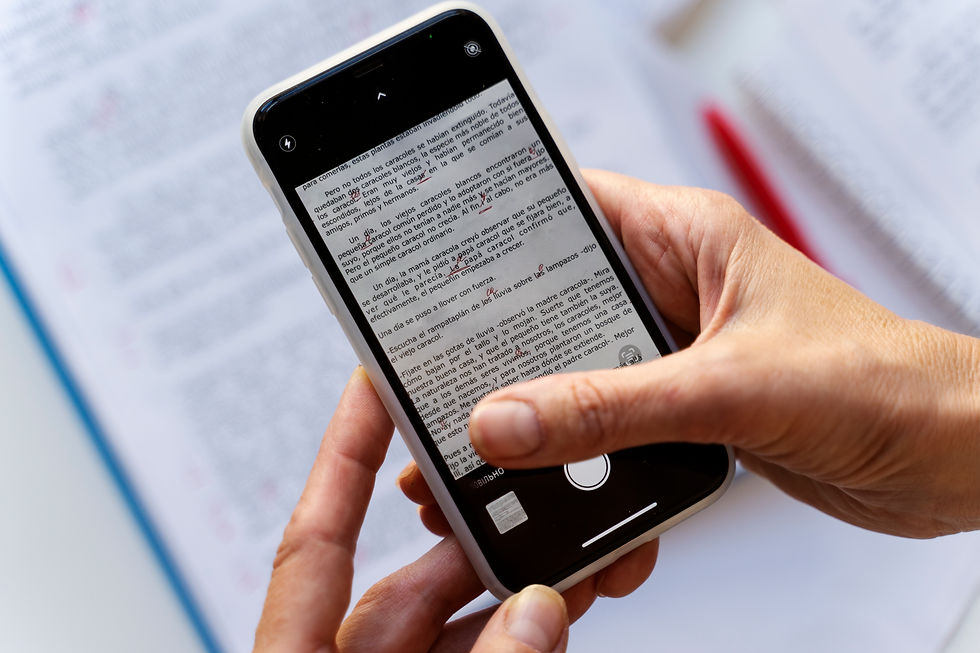
Breaking into a cold sweat in the checkout line was all the proof I needed.
The one thing I’ve found critical in today’s world is the ability not only to speak another person’s language but to truly understand it. I’ve been in Portugal for a month now, and I still haven’t had a lengthy conversation with one Portuguese person. Learning Portuguese in Portugal is a must do.
Thank goodness for the translation App’s on my iPhone, they have gotten me out of some very sticky situations, but this doesn’t replace a good old-fashioned chat with an interesting person.
Still, they have helped me buy metro tickets, navigate the grocery checkout, figure out that laundry machines supply the soap, and decipher train station schedules.
A Trip to Lisbon and Lessons to Learn
On a recent trip to Lisbon, I hired an Uber driver who used his iPhone to translate our conversation in real time. This was perhaps the longest discussion I’ve had with another human being since I arrived. I was actually a bit concerned that my vocal cords might fail mid-sentence from lack of use.
I told him I wished I’d learned more than olá (hello) and obrigado (thank you), and that I knew there would be hardship due to my inability to speak Portuguese. I also admitted I’d underestimated the challenges ahead. He laughed, and his iPhone translated his kind words: “I understand completely; our language is not an easy one to learn.”
A Cold Sweat and a Hot Checkout
I have to say, the Portuguese people have been incredibly gracious and kind, with the exception of one lady at the grocery checkout. After she scanned a sizable pile (at least two bags full of food), my debit card declined the purchase. The pleasant look on her face vanished, replaced by a glare of disgust that triggered a wave of fear and anxiety I hadn’t felt in some time.
There was no way I was leaving that store without paying or facing this angry woman’s wrath. Feeling a cold sweat trickled down my face and her stare drilled into me, I needed a solution and I needed it fast.
With a little quick thinking, plus help from yet another phone App, I was able to resolved the problem. It allowed me to finish my purchase, escape the growing line behind me, and flee the glare she had fixed upon me. After paying and bagging up my groceries I responded with one of the only two words I knew, “obrigado”, and quickly disappeared out the front door with food in hand.
Wondering how to prepare before you move to Portugal?
Learning Portuguese is much easier once you're living here, but getting here starts with understanding the D7 visa process. That's why I created my Free D7 Visa Starter Kit with the official application form, the Embassy checklist, the VFS checklist, and my own D7 Document Checklist that helped me organize everything in one place. It's a simple way to understand the process before you even begin learning the language. Download Your Free Portugal D7 Starter Kit.
Missing Out on Culture and Connection
I know I’m missing out on some of the most important aspects of the culture and the unique nuances of this country I’m now wandering through. But this handicap has given me new inspiration to learn at least a small bit of the language so eventually I can fully enjoy more of this beautiful place.
My recommendation to anyone coming to Portugal: start early and give yourself at least six months to learn simple phrases and common words. That way, you won’t be as completely lost as this Wayward Drifter has been. I've created the Portugal Living | European Portuguese Phrase Pocket Guide to help everyone get started. It has both a printable PDF and a mobile version all in one.
Learning Portuguese in Portugal: Recommendations I'm Following
Start with free or low-cost phone Apps (many offer trial periods). They’re ideal for learning the basics, include speaking features, and track progress. Being on your phone gives you the flexibility to practice while traveling or during downtime.
The next step is to take classes to practice and apply what you’ve learned in conversation. There’s no better way to learn a language than to speak it, this helps with pronunciation, word composition, and builds confidence.
There are online and group classes designed for beginners. I’ve found teachers offering one-on-one online lessons, which can feel more personal and provide live feedback that Apps can’t match.
Basic Schedule: Aim to practice 30–60 minutes a day, 5–7 days per week, for 3–6 months. The key is consistency while mixing listening and reading with speaking and writing, in other words, input and output.
I’ve organized two categories below with details to help you decide on what’s best for you:
Phone Apps (Great for on-the-go, bite-sized lessons)
App | Key Features | Pros | Cons | Cost |
Duolingo | Interactive lessons on vocab, grammar, and sentences; stories for context; daily streaks. Covers Brazilian Portuguese. | Free core version; fun and addictive; includes speaking practice. | Less depth on grammar; can feel repetitive. | Free (Super: $6.99/month for ad-free). |
Babbel | Conversation-focused dialogues; speech recognition; cultural tips. | Real-life scenarios (e.g., ordering food); quick 10–15 min lessons. | Limited free content. | $13.95/month (first month often $1). |
Memrise | User-generated flashcards with native audio; memes for retention. | Strong on pronunciation; community content for travel phrases. | Less structured than others. | Free (Pro: $8.99/month). |
Drops | Visual vocab builder (no typing); 5-min sessions on themes like travel/transport. | Engaging visuals; focuses on 2,500+ words. | No full sentences or grammar. | Free (Premium: $9.99/month). |
Online Classes (For guided structure and interaction)
Platform | Key Features | Pros | Cons | Cost |
italki | 1-on-1 lessons with native tutors; flexible scheduling. | Personalized for travel needs; instant corrections. | Quality varies by teacher. | $10–25/hour (community tutors cheaper). |
Preply | Similar to italki; video lessons with trial options. | Matching based on goals (e.g., "travel Portuguese"); progress tracking. | Requires commitment to schedules. | $15–30/hour. |
PortuguesePod101 | Audio/video lessons, podcasts, and flashcards; community forums. | Themed paths (beginner to advanced); downloadable for offline. | Less live interaction unless you add premium. | $4–25/month (basic free). |
Coursera/edX | Structured courses with videos, quizzes, and certificates. | Academic depth; self-paced. | More formal, less conversational. | Free to audit ($49+ for cert). |
Important Note: To get Portuguese citizenship (Not a requirement for Residency), you generally need to prove A2 level (basic) Portuguese proficiency, often via a recognized exam like CIPLE, but since early 2024, you can also get a certificate through accredited courses without the formal test.
Remember: learning a new language is hard work, but the reward, being able to speak and understand Portuguese, is worth it.
Enjoy your new Drift into Portuguese culture and language.


Comments